Tuesday, September 6, 2011

We've got the land

Elizabeth and Enlace in El Salvador

Since the Enlace group recently spent time in El Salvador, we thought it would be the perfect time to highlight another MCC worker, Elizabeth Scambler, who has been working with MCC in El Salvador since 2010. It has been great having Elizabeth as a part of our team and has allowed us to coordinate more group visits to El Salvador, specifically to La Linea in San Martin. Both the Enlace and RJC groups were able to visit San Martin this year and hope to continue strengthening that relationship in the future.

San Martin, and specifically La Linea, is a very difficult place to live and work. Elizabeth "works alongside two different organizations which partner with MCC. One is an NGO based out of San Salvador called ANADES. The other partner is a church, IBCD, situated in a marginalized community (La Linea) about 45 minutes from the capital. With each partner, Elizabeth works alongside their disaster recovery and resettlement projects which are responses to the damage caused by Hurricane Ida in November of 2009." As Elizabeth and her co-worker, Yesenia describe it, "Like much of El Salvador, social violence is an everyday reality. La Linea is associated with a particular gang which exists throughout the country. The main economic activities among community members are working in the informal economy (such as people who work selling in the market or in construction), working in factories, and agriculture. Unemployment in El Salvador, and in particular La Linea, is also a reality. On November 9, 2009, Hurricane Ida hit La Linea. Excessive rainfall created landslides which destroyed houses, buried others, and left other homes hanging off the edge of dangerous cliffs. Since La Linea was no longer inhabitable, everyone had to relocate to a temporary shelter closer to the Panamerican highway. 350 families live in the 5 sectors which continue to collectively refer to themselves as “La Linea.” Since people are illegally squatting, they run the risk of being kicked off this land at any time."

However recently, IBCD and the work they are doing in La Linea has shown some signs of progress; a plot of land where 250 families will relocate has been purchased. Please visit Elizabeth's personal blog to read more about this story and the work she is doing in El Salvador; The end of 30 years of displacement

Enlace's visit to El Salvador included visiting La Linea and supporting the work IBCD is doing there, as well as connecting with the many youth that live in the community; a highlight of the time for sure. The group also visited the area of Perquin and learned about the armed conflict in El Salvador and the church's role during that time. If you are interested in learning more about El Salvador's history, we highly recommend watching Voces Inocentes.


Elizabeth, on left, with past SALTer Katelyn Shank


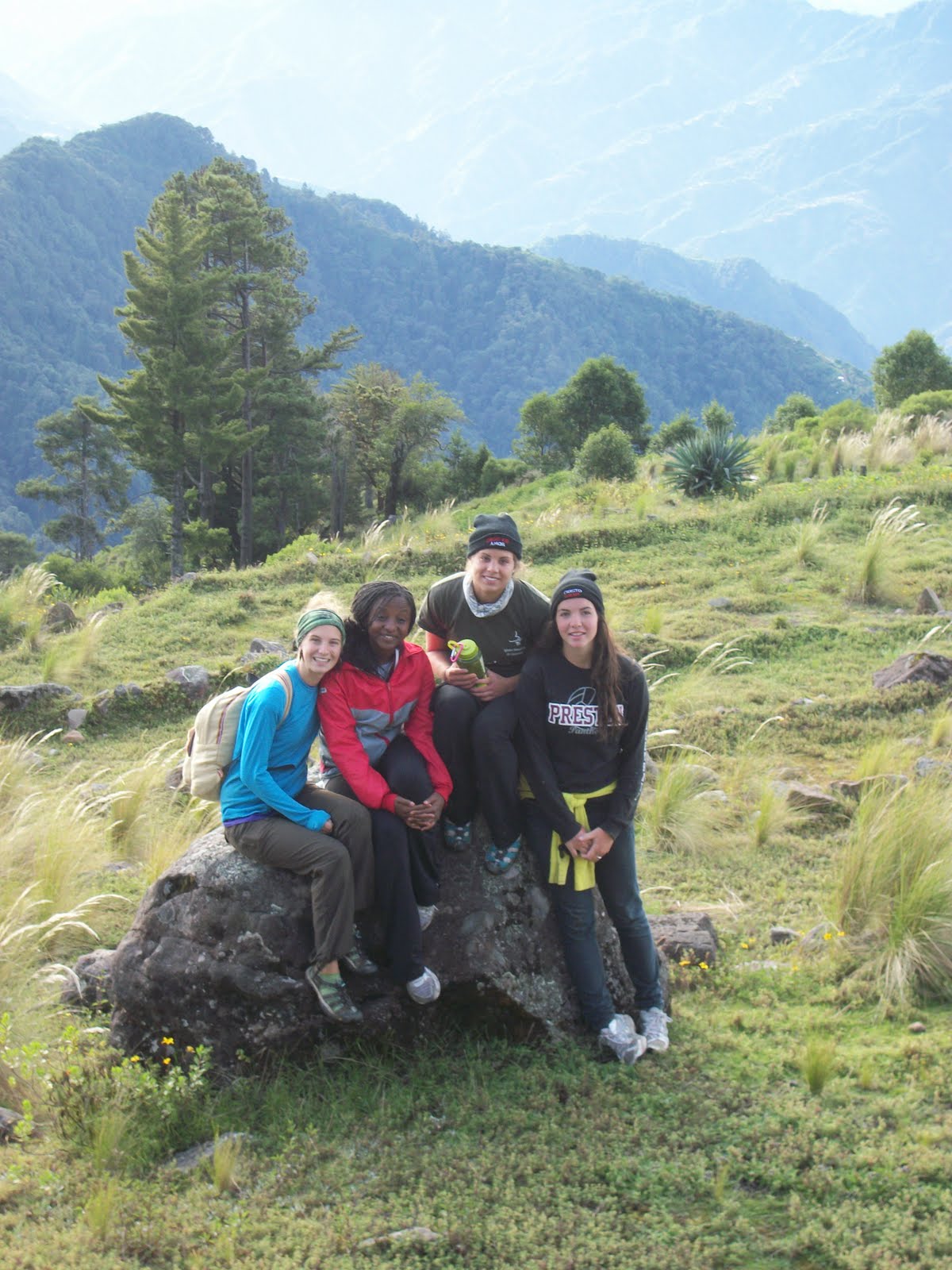
Enlace, with Elizabeth and Yesenia, waiting out the rain in Perquin

Summer Continued


Another highlight of July and August was hosting and working alongside the Enlace group. It is hard to recap a month's worth of experiences in a few words and images, especially when the group was as dynamic and fun as this one! I have always enjoyed working with Enlace, this being my fourth year to do so. The youth often come with a more intentional attitude and open perspective that fit well with the vision of the Connecting Peoples program here. MCC Ontario explains the program well on their website (see link to the right) and also has a great blog where you can find comments from past Enlace participants. Although I love all our groups, I have to say that this one was quite possibly one of my favorites. After a week of language study with the CASAS program, the group spent their time visiting projects in Santiago Atitlan, San Marcos, and El Salvador, not to mention the many times they frequented Sarita (haha!) Thank you, Enlace, for making me laugh so much and for enriching my experience here yet again.


These are just a few of the images from the group's time in San Marcos; check back soon for more on their time in El Salvador. Also, if you'd like to read more about Enlace's experience here, check out their blog: http://enlace2011.wordpress.com/


finally at the top of the tacana volcano
(second highest point in central america and second enlace group ever to conquer it!)


tourist cabin and trout tanks in la vega, san marcos
(some day the cabin will be finished and you can come stay there!)


one of our amazing cooks and her son hiking tacana
(yes, they prepared two hot meals for us during the all day hike)


during the visit to la vega, the group helped start building 12 bridges that will serve both the community at large and the community cooperative's eco-tourism project

Monday, September 5, 2011

Summer Highlights

Although it is not summertime here in Guatemala, July and August are always busy for the Connecting Peoples program as groups from North America take advantage of their summer breaks to work with the MCC supported projects here. This year was no exception as we hosted back-to-back groups from the U.S. and Canada; a Youth Venture team that is part of Mennonite Mission Network and the Enlace group that comes each year through MCC Ontario.

The Youth Venture group had the opportunity to connect with the work of Toby and Yasmin in the area of Nebaj, Quiche spending time working alongside a group of youth who are hoping to start a community bakery. The group also met with a core group of community leaders who form part of the resistance against the hydroelectric dam that is being built in the region; if you didn't have a chance to read about that in July's update, please visit here. This was the second time this year that we have been able to work with the various groups of youth in Nebaj and again was a very positive experience. Some of you (Rockway!) may recognize a few of the people and places in the photos below.


cob oven and bench created by the youth
click here to read more about this really cool, eco-friendly construction method


entrance to cafe in nebaj (see here for more pictures)


youth making lunch for the group


delicious quesadillas and licuados


baking workshop in xepiun


hike in the mountains near xepiun


starting work on the bakery's oven and seating area


almost finished product; pictures of the completed project coming soon!

Friday, July 8, 2011

Working for Indigenous Rights

As promised, over the coming months we will be highlighting a few of the service workers that make up the MCC Guatemala/El Salvador team. Tobias Roberts and Yasmin Mendez recently moved from El Salvador to start a position with MCC's partner, Q'anil, in the area of Nebaj, Guatemala. Toby worked with MCC in El Salvador for a number of years where he met Yasmin. They are both very talented and creative individuals and we're excited to have them in Guatemala! In addition to the work they are doing with youth in the outer lying communities of Nebaj, Toby has also been asked by the local communities to be an official observer in the negotiations between these indigenous communities and an international corporation building a hydroelectric dam in the area. We often talk about the mining situation in San Marcos, but think it is equally important to be aware of similar issues happening in other areas of Guatemala that may not get as much attention. We hope you will take the time to read Toby's article about this situation here: A Precedent for Indigenous Economic Rights?


"Yasmin and Tobias are living in the Mayan Highland community of Nebaj where they are working with different groups of youth on small scale economic development projects to try and create options other than migration into the cities, coastal farms and to the United States and Canada. They are also supporting indigenous communities in Nebaj and Cotzal who are resisting the construction of hydroelectric dams by foreign companies on their ancestral lands."

Monday, June 27, 2011

el equipo


One of the joys of this work is partnering with a team of people who are intelligent, dedicated, and supportive, not to mention fun and good looking :) Just a few photos of the Guatemala/El Salvador team at our recent retreat in Copan, Honduras. Stay tuned in the coming months for updates from each person and the fabulous work they are doing.


What now?

This question of what one can do after learning and being challenged through experiences here is one that comes up again and again; a question that we want groups to struggle with and one that we ourselves struggle with on a daily basis. How can we connect our experiences here to our lives at home? What can we do? Is it even possible to do anything in the face of so many huge issues? An email I recently received from a group leader expresses this inner struggle well:

"It’s very strange to realize that it’s almost been a month since we’ve been back in Canada. It sometimes feels like it’s so easy to lose touch with experiences such as what we had. One thing I always struggle with when I travel is how to reconcile the two realities. It boggles my mind that flying 6 hours can put you in such a different situation."

In the work we do with MCC, we often use this great word "advocacy" as an answer to these questions. But really, do we even know what advocacy means? How can advocacy be turned into concrete actions that make sense in our daily lives? Rebecca Bartel, former policy analyst for MCC Latin America and the Caribbean, has written a great article that outlines some basic steps in starting this process; see below for highlights from her article. For more information on what MCC is doing and how you can become engaged, contact the current policy analyst at: policyanalyst@laca.mcc.org
MCC Latin America Advocacy Blog

What is Advocacy?
A tool for carrying out MCC’s mission by
fomenting change in the structures and
policies that create injustice, as well as
creating the conditions necessary for
sustainable development,
reconstruction, peace and justice work
to be possible. It is a necessary tool in
the building of God’s Kingdom.

Advocacy is more than only witnessing to
government; it is a process of raising awareness
in ourselves and in our communities about the
root causes of the issues we are working with in
our service assignments. Advocacy is about
taking concrete situations of poverty, violence,
injustice and lack of human dignity, to a
broader level of analysis which looks at the
structural and systemic reasons for the
problems we work to address in our work with
communities and churches.

How you can get involved
SEE – Experience
What do I know of this issue?
What have I experienced of this?
Who are affected most by this and how?
How has the issue arisen?

JUDGE – Analyze
Why is this happening?
Who gains from this situation?
Who loses out?
Why does this situation continue?

REFLECT – A Faith Perspective
What particular insight/view does our faith, church teaching, and scriptures give us on this issue?

ACT - Advocate
What needs to be done to resolve this situation? What can I/we/my church community do?
How will your action change those involved?
How can you tell if it is successful?

And...A Few Action Ideas
(thank you to the staff at the Canadian Foodgrains Bank for sharing these)

SHOP WISELY
: Choose and ask for environmentally sustainable goods and services, and Fair Trade. Avoid products subject to boycott due to severe violations of human rights, and labour rights.

SPEAK UP: Communicate your interest in these products to stores and businesses that don’t offer them at present. Research alternatives.

GIVE: Volunteer and financially support organizations doing good work for hunger and food security, caring for Creation, protecting human rights, bringing about trade justice, etc.

SHARE: Communicate your views with your elected government officials— MP’s , MLA’s, the PM. Write a letter, email, or postcard. Or call them up and ask for a visit.

ADVOCATE: For civil, provincial, and federal adherence to the highest internationally binding environmental, and human rights standards, peace campaigns, etc. E.g. the Human Right to Food.

LEARN: Cultivate a spirit of passionate curiosity. Keep yourself informed about the issues. Keep learning and share what you learn with colleagues, family and friends.

WATCH: Peruse the internet, radio, television, newspapers, magazines and other media for signs of hope and struggle.

DISPELL: Be a myth buster, avoid perpetuating stereotypes and prejudices about people, and poverty, anywhere in the world.

BUILD: Incite solidarity & compassion for all people facing hunger and injustice, at home and abroad.

USE: Consume God’s gifts of Creation wisely. Use less fossil fuels, energy, water.

PRAY: For these issues, for the people you have met, for an end toinjustice, hunger and oppression.

Monday, May 30, 2011

El Migrante Spanish School opens in San Marcos


For those of you who have been thinking about returning to Guatemala (or coming for the first time!) and are interested in studying Spanish, there is now a new and exciting option in San Marcos where many of you have visited. We encourage you to take some time and look at what El Migrante Spanish School has to offer.

"Many of you may know that Guatemala is a popular place to study Spanish. The cities of Quetzaltenango (Xela) and Antigua are the two principal locations for schools. We are very excited to announce the opening of “El Migrante Spanish School”, the first and only Spanish school in San Marcos. For those of you familiar with the city of San Marocs, “El Migrante” is located close to the Central Park, a few streets from the Cathedral. Our teaching staff is comprised entirely of local teachers from San Marcos who have experience teaching in the Spanish schools in Xela. The mission of El Migrante Spanish School is not only to provide the one-on-one, interactive Spanish classes that have been developed here in Guatemala, but also to create meaningful, empowering employment for the people of San Marcos. El Migrante Spanish School is also an important space for cultural exchange for the teachers, host families, staff, and population in general. We would like to invite those folks who have come through San Marcos with MCC to come and study Spanish here. If you have been looking to come back to Guatemala and/or San Marcos, this is great opportunity to do so. Learning Spanish with us will most certainly deepen and enrich your travels in Guatemala and beyond. Visit our website at
www.elmigrantespanishschool.com and connect with us via www.facebook.com/elmigrantespanish and www.twitter.com/elmigranteguate